Yamaha Rightwaters and Georgia Southern University released new findings from a collaborative coastal conservation project, demonstrating restored oyster reefs can significantly enhance salt marsh growth and shoreline stability along the Georgia coast.
This press release features multimedia. View the full release here: https://www.businesswire.com/news/home/20260430671731/en/
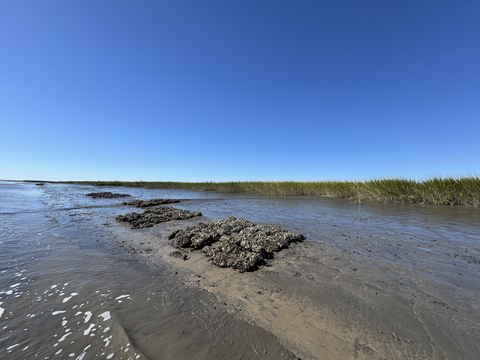
Yamaha Rightwaters and Georgia Southern University conducted a study in partnership with the Georgia Department of Natural Resources Coastal Resources Division to evaluate the impact of oyster reef restoration on marsh migration and expansion over 19 months following deployment in September 2023. Researchers analyzed changes in marsh area and shoreline position using aerial imagery collected before and after restoration at multiple sites along the North Newport River.
The study, conducted in partnership with the Georgia Department of Natural Resources Coastal Resources Division, evaluates the impact of oyster reef restoration on marsh migration and expansion over 19 months following deployment in September 2023. Researchers analyzed changes in marsh area and shoreline position using aerial imagery collected before and after restoration at multiple sites along the North Newport River.
Results recently published in the journal Diversity showed all restored sites experienced consistent marsh growth, outperforming nearby unrestored control sites despite varying environmental conditions. On the eastern, more exposed shoreline, restored areas increased by more than 50 square meters, while control sites experienced a net loss in marsh area. Along the southern shoreline, marsh expansion at restoration sites was approximately twice that of control locations, with shoreline migration rates two to three times higher.
“This study provides strong evidence that oyster reef restoration can accelerate marsh expansion and improve stability in dynamic environments such as the Georgia coastline,” said John Carroll, Ph.D., professor of Biology at Georgia Southern University. “These insights are essential for developing effective, science-based approaches to conservation and restoration.”
Over the full study period, restored marshes expanded by an average of 47 square meters and migrated more than 1.4 meters seaward toward the oyster shell structures. In contrast, control sites showed minimal overall change and greater variability, including periods of habitat loss.
“Oyster reefs are essential fish habitat, but their value extends beyond the reef itself—helping stabilize shorelines and support marsh growth,” said Cameron Brinton, Marine Biologist, Habitat Unit, Coastal Resources Division, Georgia Department of Natural Resources. “By quantifying these benefits, we can better align restoration efforts with partners who may not traditionally prioritize oysters.”
Salt marshes provide critical ecosystem services, including erosion control, habitat for marine life and carbon storage. The findings indicate that integrating oyster reef restoration into coastal management strategies may help mitigate marsh loss driven by climate change and coastal development.
“These results reinforce the value of oyster reef restoration as a nature-based solution for strengthening coastal ecosystems,” said Joshua Grier, Sustainability Program Manager, Yamaha U.S. Marine Business Unit. “By supporting marsh growth and improving shoreline resilience, Yamaha Rightwaters can help play a meaningful role in addressing habitat loss and advancing our understanding of carbon sequestration potential.”
Building on earlier research initiated in the Gulf of Mexico with Texas A&M University’s® Harte Research Institute and the Coastal Conservation Association®, Yamaha Rightwaters continues to support efforts that evaluate the ecological and carbon benefits of oyster reef systems. Data from both initiatives will help inform future conservation strategies and the potential for scaling similar restoration projects.
Yamaha U.S. Marine Business Unit, based in Kennesaw, Ga., markets and sells marine outboard motors ranging in size from 2.5 to 450 horsepower. It also engineers, manufactures, markets, and sells boat control systems, IOT control devices, fiberglass, jet-drive sport boats ranging from 19 to 29 feet, and personal watercraft. The unit includes the manufacturing divisions of Yamaha Marine Systems Company, Inc., including Yamaha Marine Rotational Molders of Milwaukee (rotational molding), Bennett Marine of Deerfield Beach, Fla. (trim tabs), and Yamaha Marine Precision Propellers of Indianapolis (stainless steel propellers). Yamaha Marine Business Unit is a division of Yamaha Motor Corporation, U.S.A.
Georgia Southern University, a public Carnegie Doctoral/R2 with a Carnegie Community Engagement classification, offers approximately 149 different degree programs serving nearly 31,600 students through 11 colleges on four campuses in Savannah, Hinesville, Statesboro, Swainsboro and online instruction. Founded in 1906, Georgia Southern is a leader in higher education in southeast Georgia with expert faculty and a focus on public impact research and engaging learning opportunities through knowledge and know-how that prepare our students to soar beyond and take ownership of their lives, careers and communities. Visit GeorgiaSouthern.edu.
This document contains many of Yamaha’s valuable trademarks. It may also contain trademarks belonging to other companies. Any references to other companies or their products are for identification purposes only and are not intended to be an endorsement.
REMEMBER to always observe all applicable boating laws. Never drink and drive. Dress properly with a USCG-approved personal floatation device and protective gear.
© 2026 Yamaha Motor Corporation, U.S.A. All rights reserved.
View source version on businesswire.com: https://www.businesswire.com/news/home/20260430671731/en/
Media gallery