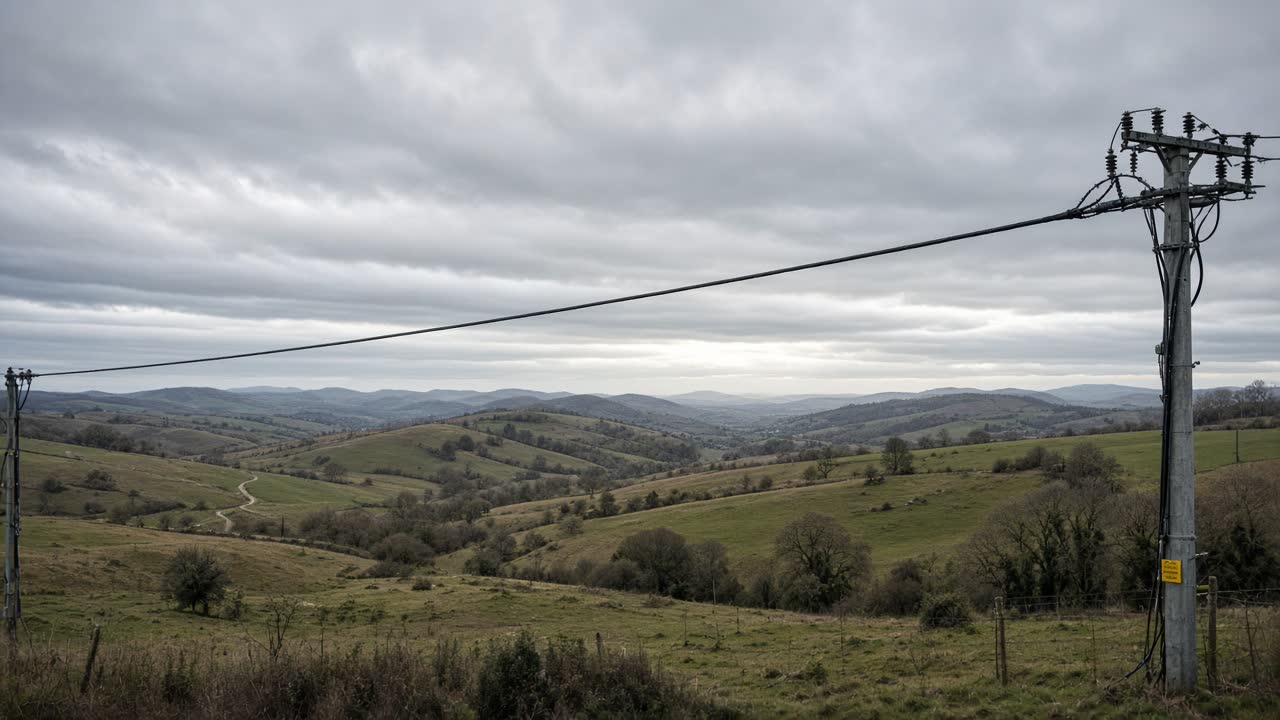

SHENZHEN, GUANGDONG, CHINA, November 26, 2026 /EINPresswire.com/ — Why Telecom Operators Trust Fiber Hope As A Reliable 200m Span ADSS Cable Manufacturer
Telecommunications service providers worldwide face escalating pressure to expand regional optical backbones, bridge suburban connectivity gaps, and support dense mobile base station backhaul. While deploying aerial fiber optic cables along existing electrical distribution corridors offers a cost-effective and rapid route to broad coverage, selecting the correct structural specification dictates whether an optical link operates continuously for decades or fails prematurely under outdoor exposure. When technical procurement teams evaluate overhead fiber infrastructure for mid-span distribution networks, choosing a Reliable 200m Span ADSS Cable Manufacturer represents a vital strategic step in mitigating long-term operational and capital risks. All-Dielectric Self-Supporting (ADSS) cables must endure severe tensile stresses, high wind loading, heavy ice accumulation, and ambient temperature fluctuations without relying on metallic support wires or continuous grounding networks. Consequently, tier-one operators utilize structured technical due diligence frameworks to evaluate prospective cable producers on raw material integrity, mechanical design precision, manufacturing consistency, and international regulatory compliance before issuing commercial contracts.
The Operator Procurement Lens: Rigorous Technical Due Diligence in Aerial Optical Infrastructure
Telecom procurement teams evaluate aerial fiber optic investments through a comprehensive risk management lens rather than focusing solely on initial material acquisition costs. Optical infrastructure installed along high-voltage power corridors or municipal utility poles must remain operational across a 25-year design lifecycle without requiring frequent field repairs or costly emergency splice interventions. Furthermore, mid-span installations introduce complex mechanical dynamics that amplify physical stress on internal optical fibers.
Conducting rigorous technical due diligence helps operators prevent catastrophic network outages caused by line sag, sheath dry-band electrical tracking, or aramid strand snapping. When auditing overseas cable producers, technical evaluators analyze raw material supply chains, factory quality management protocols, and inline optical testing procedures. A manufacturer must demonstrate clear engineering transparency, repeatable manufacturing controls, and extensive testing documentation to pass these stringent operator qualification hurdles.
Engineering Differentiation: Key Structural Differences Between 100m and 200m Span ADSS Cables
Navigating aerial cable selection requires a precise understanding of how span distances alter structural cable engineering and cross-sectional designs. Standard short-span designs, such as 100m span outdoor ADSS cables with 6 to 144 cores, address urban and suburban distribution routes where utility pole density remains high. These shorter spans experience lower tensile loads, allowing manufacturers to use lighter aramid yarn layers and thinner outer jacket walls while maintaining acceptable mechanical safety margins.
Conversely, extending pole spacing to a 200m span dramatically increases mechanical tension, aerodynamic drag, and environmental exposure. Heavy-duty configurations, including specialized 24-core ADSS cables built for 200m spans, require significantly higher amounts of high-modulus aramid yarn to absorb longitudinal tensile stress and prevent strain transfer to sensitive glass cores. Additionally, engineers must thicken the inner and outer protective jackets to shield optical fibers from radial compression during heavy wind gusts or ice loading. Understanding how to pick ADSS cable for 100m, 200m, and long-span jobs ensures that procurement managers select the correct structural construction for their specific geographical terrain and pole spacing requirements.
The 5 Essential Technical Audit Checkpoints for 200m ADSS Cable Procurement
Evaluating a 200m span ADSS cable supplier involves five essential technical audit checkpoints that verify structural integrity, chemical stability, and long-term quality:
Tensile and Sag-Tension Calculations: Evaluators must verify Maximum Allowable Tension (MAT), Everyday Tension (EDS), and Ultimate Tensile Strength (UTS) data. Manufacturers must provide precise sag-tension software simulations tailored to local wind and ice climate profiles.
Environmental Sheath Resistance: Technical audits assess outer jacket compounds. Standard Polyethylene (PE) sheaths suit low-voltage utility lines, while Anti-Tracking (AT) sheaths are mandatory when electrical space potential exceeds critical thresholds to prevent dry-band arcing.
Sample Verification and Testing Records: Operators require 100% factory optical loss trace reports and 3D end-face verification records for every production batch before authorizing shipment.
Quality Credentials and Documentation: Validating ISO 9001, ISO 14001, CE, RoHS, and CPR certifications guarantees that manufacturing processes adhere to internationally recognized quality and environmental standards.
Lead-Time Predictability and Supply Chain Resilience: Procurement teams review raw material inventory management and automated cabling capacity to ensure reliable delivery schedules for large-scale network rollouts.
Manufacturing Consistency & Customization Agility: The Fiber Hope Engineering Standard
Meeting rigorous operator audit standards requires a combination of automated manufacturing equipment, precision material selection, and flexible engineering support. Overseas telecom operators frequently encounter unique environmental challenges, ranging from extreme temperature fluctuations in desert climates to severe icing conditions in mountainous regions. A standardized, rigid product line cannot effectively serve these diverse operational environments.
To address these complex engineering demands, Fiber Hope (Fiber Hope Optical Communication Tech Co.,Ltd.) maintains a structured custom design workflow that tailors cable parameters directly to client environmental matrices. Factory engineers calculate exact aramid yarn densities, core arrangements, and sheath dimensions for specific 200m span projects, ensuring structural stability without unnecessary material overhead. This rigorous engineering approach aligns with global operator standards, mirroring the strict technical reliability demonstrated in large-scale telecom infrastructure rollouts and regional FTTH network expansions across international markets.
Executive Summary & Operator Technical Due Diligence Checklist for 200m ADSS Sourcing
Selecting a qualified manufacturing partner for 200m span ADSS cables requires a disciplined audit approach that balances structural mechanics against verified factory quality controls. By auditing tension calculations, sheath material chemistry, 100% factory test documentation, and international certifications, telecom operators can deploy overhead optical networks with complete confidence.
Operator Technical Due Diligence Checklist:
Sag-Tension Simulation Reports: Has the manufacturer provided verified sag-tension calculations tailored to 200m span geometries and local weather loading?
Tensile Strength & Aramid Density: Do the technical specifications confirm adequate MAT and UTS values supported by sufficient high-modulus aramid yarn content?
Outer Sheath Formulation: Is the outer jacket specified correctly with Anti-Tracking (AT) material if space potential along the power corridor exceeds 12kV?
Factory Test Documentation: Does the supplier include 100% factory OTDR optical loss reports and physical stress test records with each shipment?
Certified Quality Management: Does the facility hold active ISO 9001, ISO 14001, CE, and CPR certifications, and do they accommodate independent pre-shipment third-party inspections?
To review technical specifications, request sag-tension calculations, or verify factory credentials, visit the official company website at https://www.cablefiberhope.com/.
Fiber Hope Optical Communication Tech Co., Ltd.
Fiber Hope Optical Communication Tech Co., Ltd.
email us here
Legal Disclaimer:
EIN Presswire provides this news content “as is” without warranty of any kind. We do not accept any responsibility or liability
for the accuracy, content, images, videos, licenses, completeness, legality, or reliability of the information contained in this
article. If you have any complaints or copyright issues related to this article, kindly contact the author above.

Media gallery